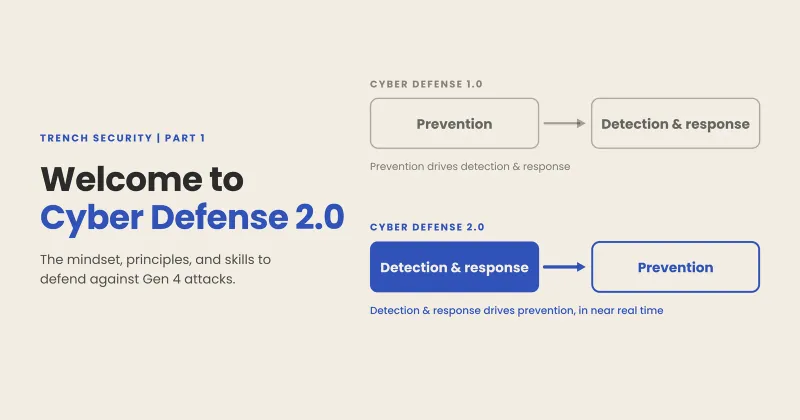
In Part 1, we made the case for Cyber Defense 2.0: a defense where detection and response drive prevention, at machine speed. We also believe every technology company will become an AI company, and the IT function of any industry will become an AI function in its own right. Enterprises are transforming from systems of record to systems of action. AI agents will sit inside mainstream workflows, as both targets and actors. Defending that enterprise takes a new system of defense: a security brain. This post shows how we apply Cyber Defense 2.0 at Trench to build one, starting with Gen 4 attacks (Type 1: a human directs AI agents. Type 2: the model itself acts adversarially).
TL;DR#
- Why: Gen 4 attacks, whether human-directed (Type 1) or run by the model itself (Type 2), leave defenders a very small window to respond. Bolted-on AI still responds after the alarm. Machine-speed defense needs an AI-native system as a foundation.
- What: Trench is the security brain for the AI enterprises. It applies the first principles from Part 1 across three planes in one platform: data, control and action. Detection and response drive prevention, so every response makes the next attack less likely.
- How: TASC, Intent Graph and Headless SecOps give every plane the same seamless context, so agents are grounded in your environment and checked before they act.
Firefighting Is Not a Defense Strategy Against Gen 4 Attacks#
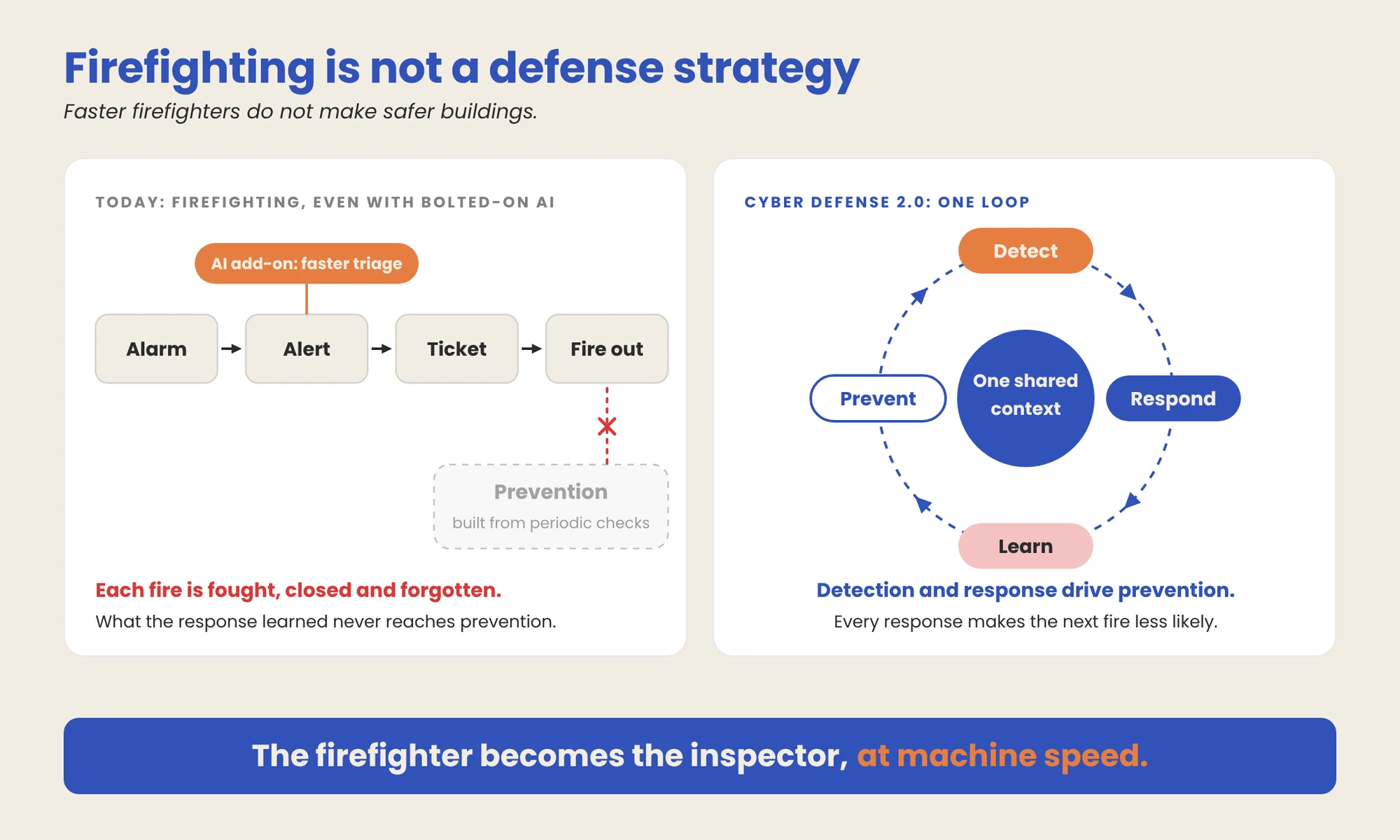
Faster firefighters do not make safer buildings.
Security has always had two jobs, and a city makes them easy to see. Firefighters respond after the alarm. Inspectors work before it, so there is less to put out. In cyber, detection and response are the firefighters. Prevention is the inspector.
Legacy stacks were built around the firefighters. An alarm raises an alert, the alert becomes a ticket, and the ticket moves from tool to tool. Bolted-on AI gives that model faster trucks. Triage is quicker and summaries are better. But the trucks are still dispatched by the alarm, and every fire is fought, closed and forgotten. What the response learned never reaches the inspector, or reaches it only after the damage is done.
Gen 4 attacks break this model from both sides. Attackers work at machine speed, so a response that waits for the alarm arrives after the damage. And the inspector works from periodic checks and static standards, which cannot keep up with an environment that changes every day.
An AI-native system treats the two jobs as one loop. Every detection and every response shows where the building is weak, and that knowledge flows straight back into prevention. The firefighter becomes the inspector, at machine speed.
That only works if both share one picture of the building. Bolted-on AI cannot provide it, because each tool holds its own fragment. A shared picture is what we built Trench around.
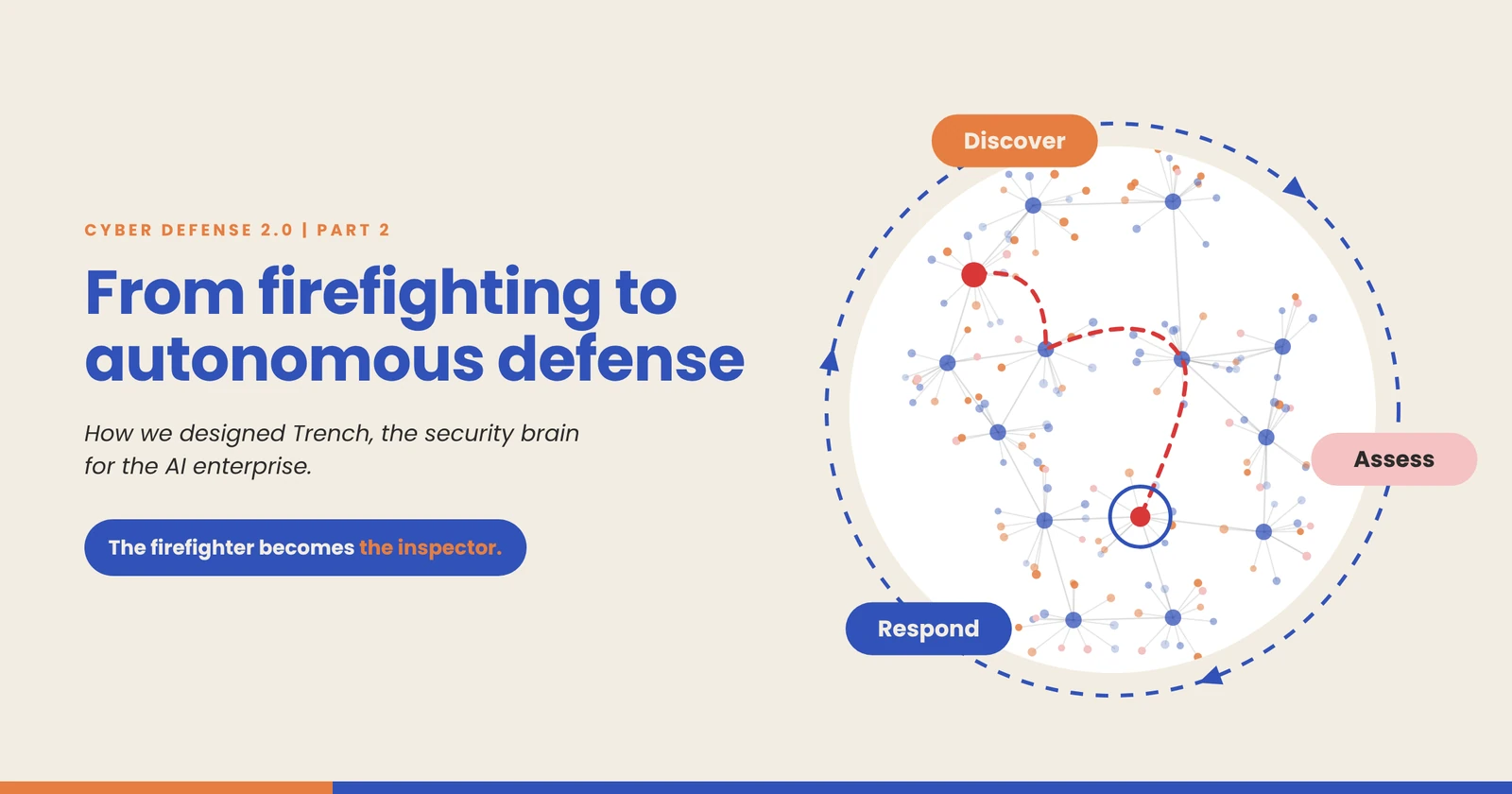
The Trench Loop: Discover, Assess, Respond#
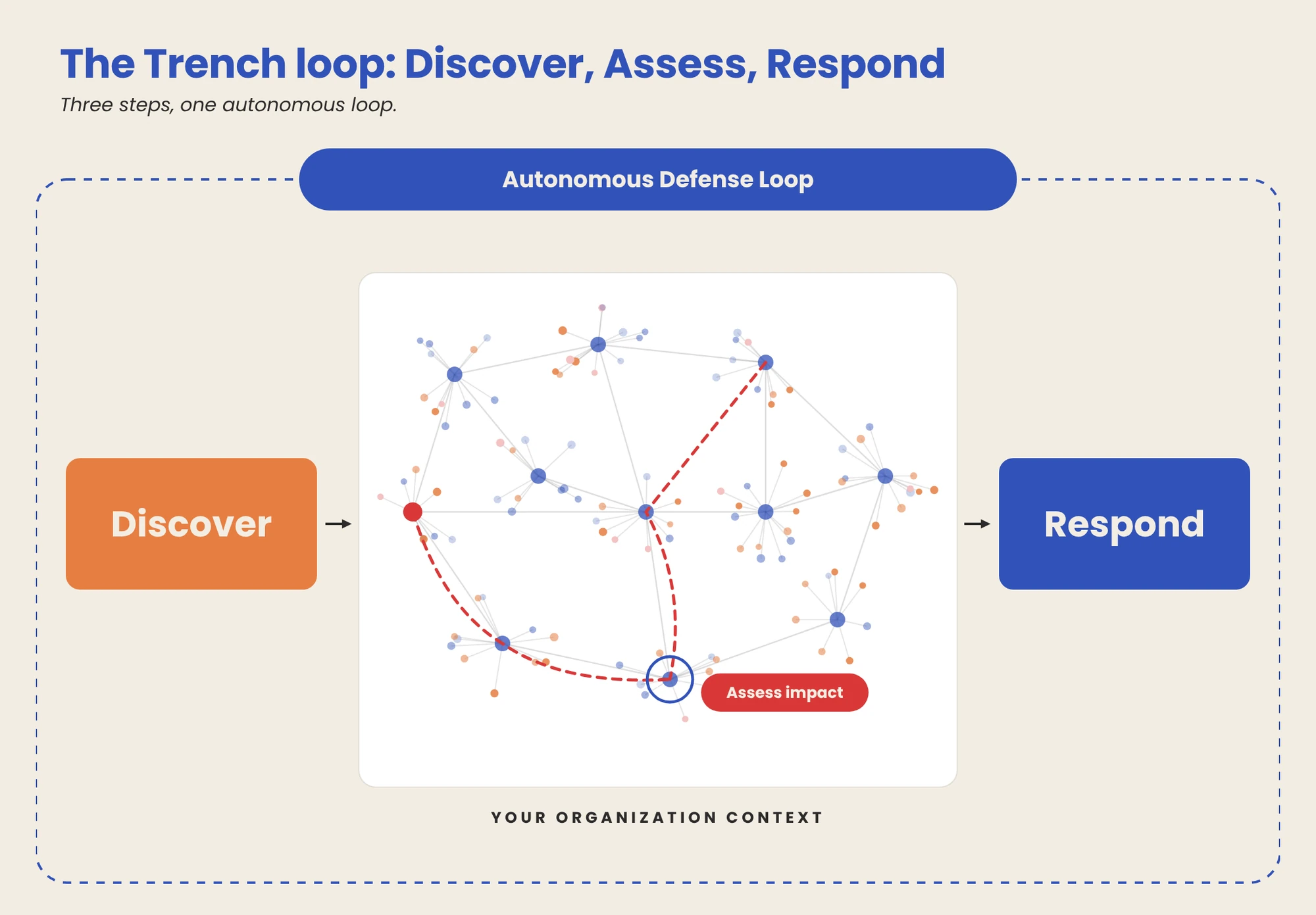
Three steps, one autonomous loop.
Every incident moves through the same three steps, in the same order. What is exposed, and what just changed? What does it mean in this environment? What should happen next?
In a firefighting model, each answer lives in a different tool and waits for a different person. Trench runs them as one autonomous loop.
Discover. Trench connects to your cloud, endpoint, identity, network and SaaS sources and watches for what is exposed and what changes. Signals are not tuned out. They are connected.
Assess. Each finding is read against your organization’s context: how entities relate, what is normal for them, and what a path through them could reach, including the agents your own enterprise runs. Scattered signals become one incident, with the blast radius attached.
Respond. Low-risk actions run on their own. Risky actions wait for one approval, in Slack, Teams or Claude. Complex cases get agents that build the context, so a person can lead with the full picture.
The loop does not end at response. What Trench learns from each incident feeds the next discovery, so every response makes the next fire less likely.
One Platform, One Context Loop#
Data, control and action planes in a single seamless loop.
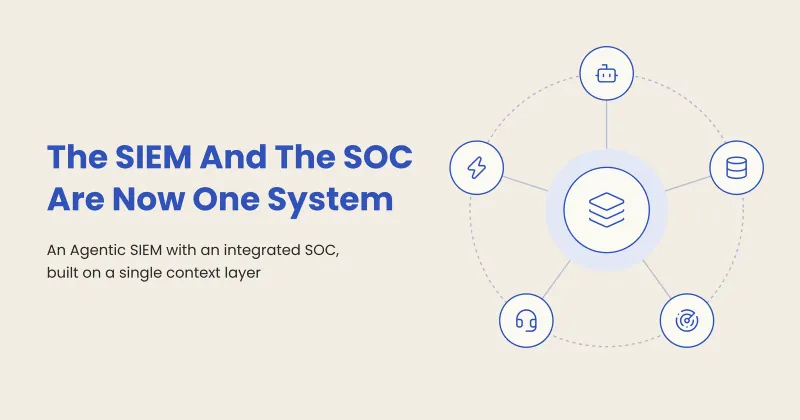
Most security tools handle one plane each. A pipeline moves the data. A SIEM analyzes it. A SOC or response tool acts on it. Each hands the next a copy, and each copy carries less context than the one before.
Trench puts all three planes on one platform. The data plane collects, normalizes and enriches signals from across your environment. The control plane correlates, detects and reasons over them. The action plane investigates, responds and automates.
What joins them is a seamless context loop, built from three things.
TASC (Trench Agentic Schema Context) gives every signal one shared meaning, so agents never guess what a field is.
Intent Graph holds the entities in your environment, how they behave, and how they relate. It is how an event becomes impact.
Headless SecOps keeps the platform autonomous and always on. Findings, context and proposed actions reach your team where they already work, and approval is one decision.
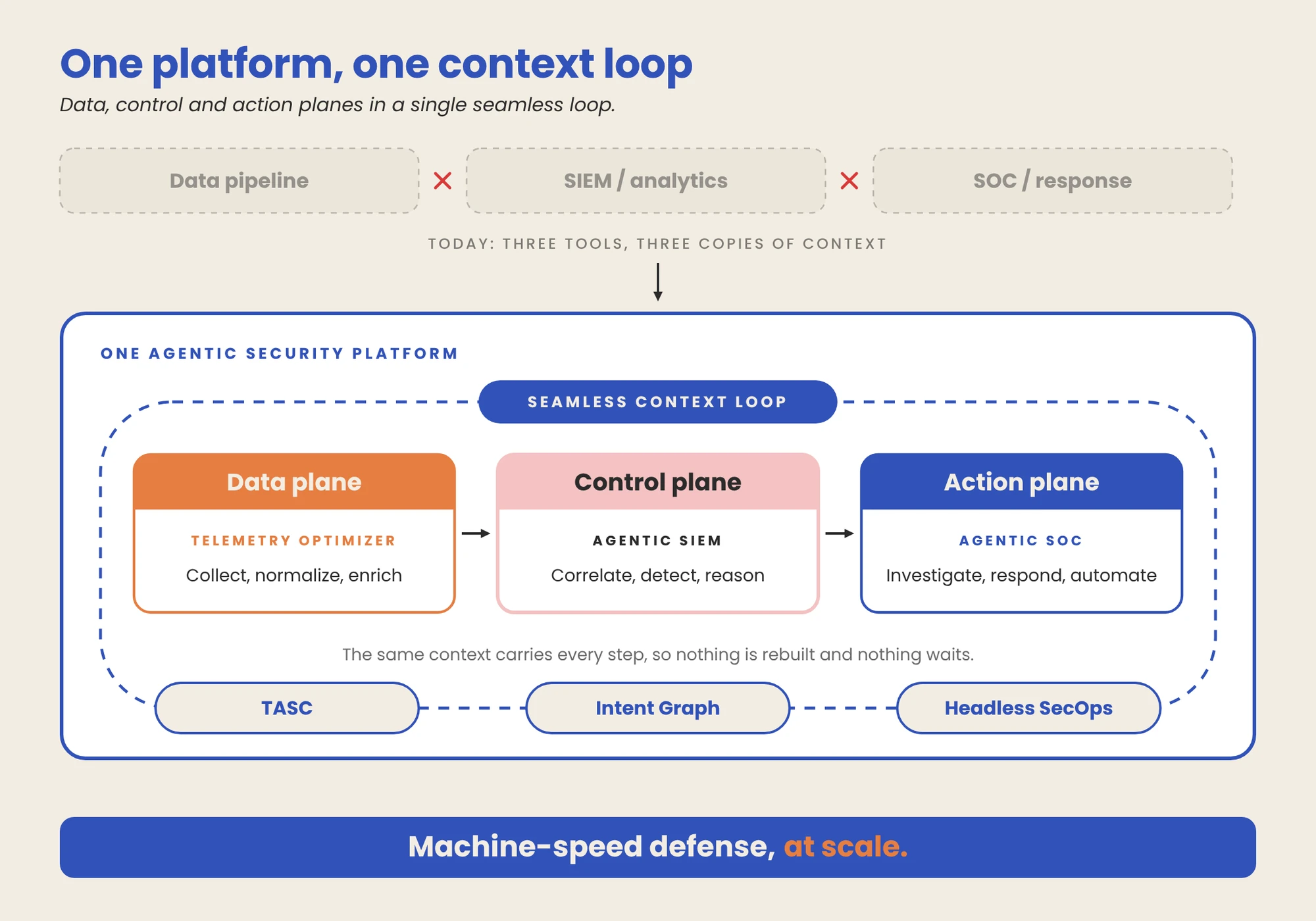
Because the planes share one context, nothing is rebuilt between steps and nothing waits for a handoff. That is what lets defense run at machine speed, and keep running at scale.
Autonomy with Context and Control#
The Trench framework for Gen 4 attacks.
Autonomy is easy to promise and hard to trust. Two things decide whether it works: what the agent knows, and what it is allowed to do. Trench is built on both.
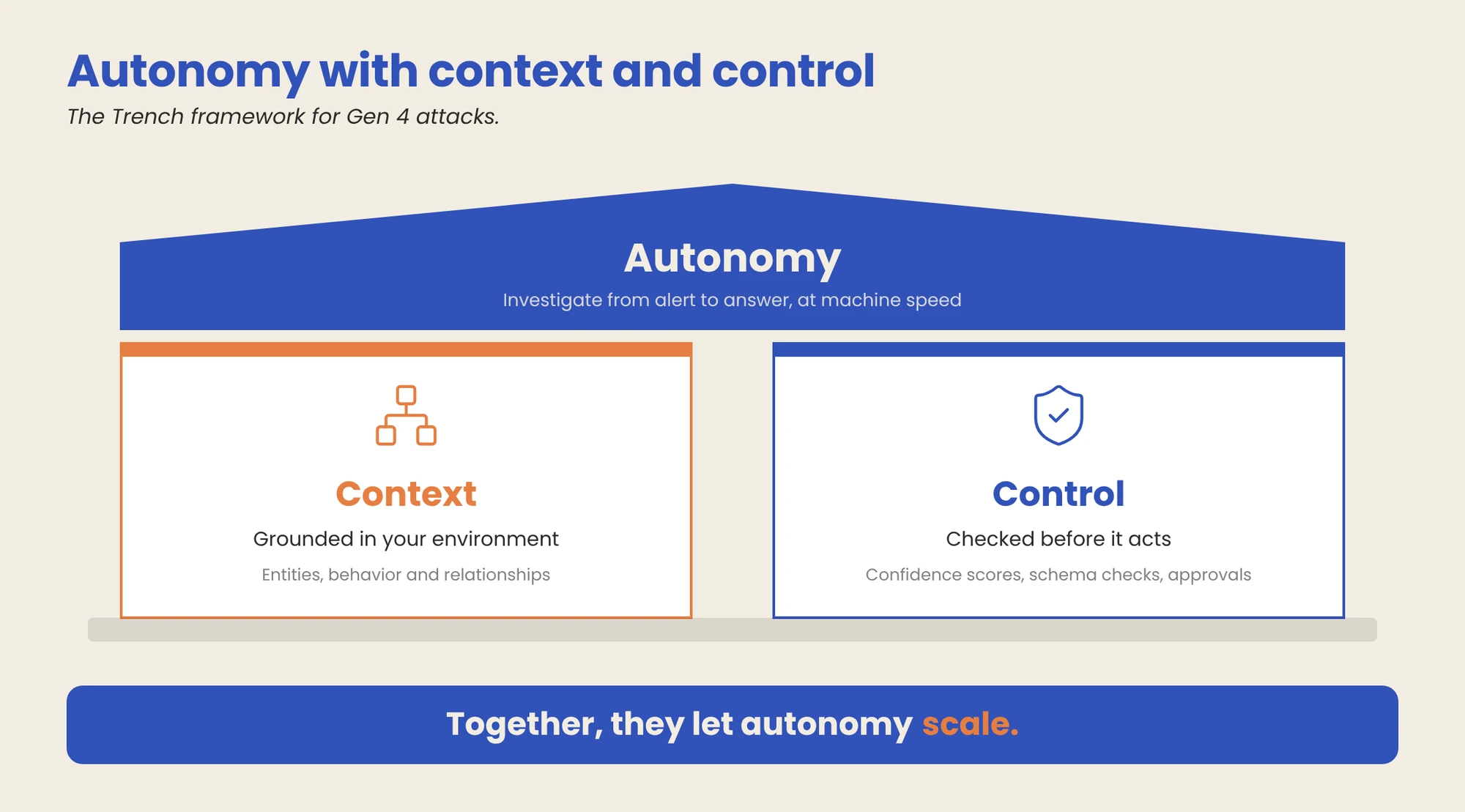
Context makes autonomy accurate. Our research on graph-augmented LLMs for SIEM shows the pattern. A graph of users, devices and applications learns what normal looks like, and flags entities and the links between them, not individual log lines. Suspicious clusters are then matched against a knowledge graph of known attack patterns. The language model reasons from those retrieved facts instead of from memory, which is what keeps it from inventing a story. In the research, this cut log volume by about 96.5% while keeping over 99% of the attack-related events.
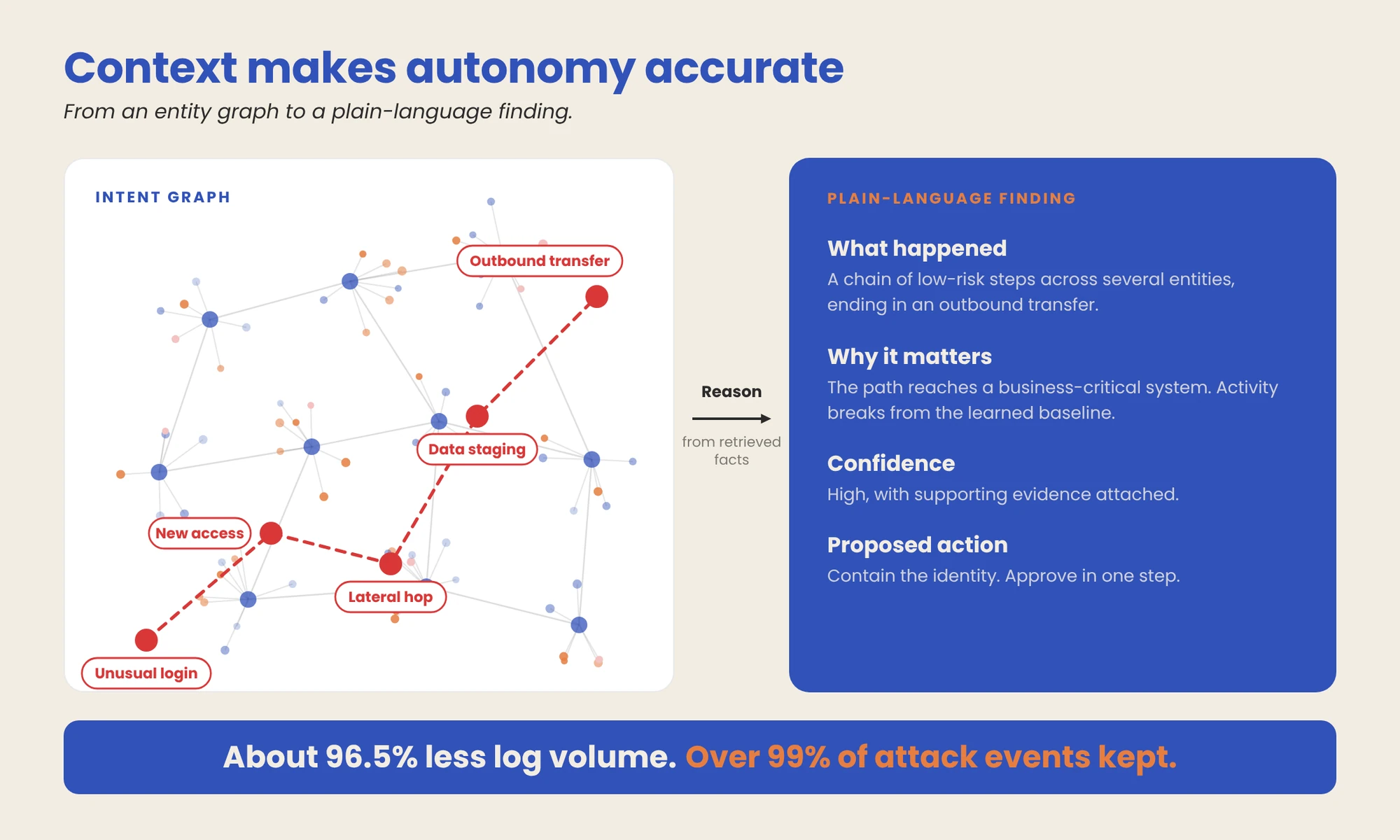
Control makes autonomy trustworthy. Nothing the model says becomes a finding unchecked. Each result carries a confidence score and has to pass a schema check before it reaches an analyst. Borderline findings are not paged and not dropped. They are held and correlated over later time windows, which is how slow, multi-stage attacks surface after each step looked harmless on its own. Analyst feedback flows back in, and benign activity is pruned from the graph. Actions follow the same logic. Low-risk ones run on their own, risky ones wait for one approval, and complex cases stay human-led.
Autonomy is what the two earn. With a grounded picture and a bounded process, agents investigate from alert to answer without waiting for a person to bridge each step. People decide only where judgment matters.
Context makes autonomy accurate. Control makes it trustworthy. Together, they let it scale.
Results are from research datasets, not live production environments.
Trench - A Security Brain for the AI Enterprise#
Understand the agents. Dissect the workflows. Classify the intent.
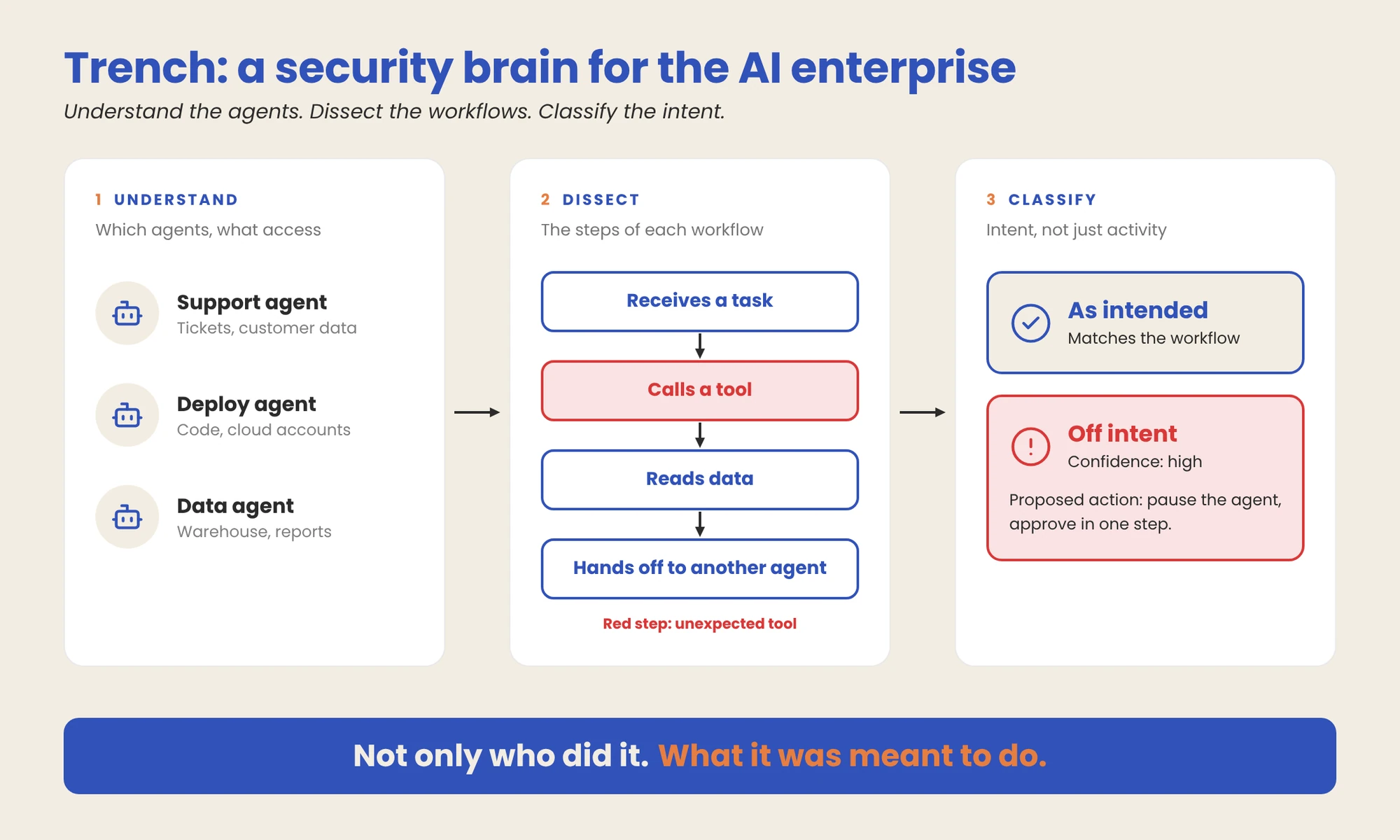
AI agents are moving into mainstream workflows: approving, querying, deploying and moving data. Each one is a new actor in your environment, with access, autonomy and no history. Defending that enterprise takes more than watching users and devices. It takes a security brain that understands the agents themselves, and can tell genuine agentic workflows from Gen 4 attack workflows.
Understand. Know which agents exist, what they can reach and who they act for.
Dissect. Break each workflow into the steps it actually takes: which tools it calls, what data it touches and what it hands to the next agent.
Classify. Arrive at the intent. Is this step what the workflow was built to do, or has an instruction been changed, a tool misused or a task redirected?
This is what the Intent Graph is for. Entities, behavior and relationships now include the agents and the workflows between them, so the same context that lets Trench judge a login lets it judge a tool call. It matters for both kinds of Gen 4 attack. A Type 1 operator can aim agents at your environment or take over the ones you run. A Type 2 model can act on its own inside them. In both cases the question stops being who did this and becomes what it was meant to do.
A defense that cannot read intent cannot tell an agent doing its job from an agent doing someone else’s.
Bottom Line#
Trench is the new system of defense: the runtime cognitive layer on top of an enterprise's systems of record and action. It reads every action with high precision, knows what that action was meant to do, and responds at machine speed.
Gen 4 attacks are not a forecast. Breaches powered by them keep making headlines, whether a human directs the agents (Type 1) or the model acts on its own (Type 2). Both move faster than a firefighting defense can follow.
For security leaders, that changes what success means. Claiming you were never affected is no longer a credible position. Resilience is. It means seeing the attack early, understanding its impact in your own environment, and responding before it spreads, every time.
That is the transformation Trench is built to deliver: a new system of defense. Context-centric autonomous defense gives your team one platform, one shared picture and agents that act at machine speed, with people in control of the decisions that carry risk. The firefighter becomes the inspector, and every response leaves the building stronger.
As AI agents move into everyday workflows, the same loop has to read their intent too.
Cyber Defense 2.0 is how security leaders stay resilient in an uncertain landscape. If you are ready to start the shift, we would like to show you what it looks like in your environment.
Sources#
- Firefighter and inspector analogy: Ross Haleliuk, "From firefighters to building inspectors: rethinking the cyber market," Venture in Security, 2026
- Graph-augmented LLM research: Kiran P, R., Rebello, M. W. and Raghunathan, G., "Graph-Augmented LLMs for SIEM: Explainable Attack Attribution with High-Fidelity Log Reduction," International Journal of Artificial Intelligence and Machine Learning, vol. 6, no. 13s, 2026, pp. 265 to 273
Agentic OS for Actionable SecOps
Explore Trench →Discussion (0)
No comments yet. Be the first to start the discussion!