The Problem: The Gap AI Triage Did Not Close#
The first wave of AI in security operations promised to fix alert fatigue. It did not. It moved the problem one layer up.
What the industry delivered was faster triage: AI that classifies alerts more quickly and enriches them with more context before they reach an analyst. Useful. Not sufficient. The unit of work is still the alert. A human still has to open it, evaluate it, and decide what to do. The queue still grows. The analyst still burns out. And the problem the team was hired to solve, actual threats, still competes for attention with the noise the system continues to produce.
AI triage did not move these numbers. Nearly half of all alerts are still false positives in teams already running AI tooling. GenAI has given threat actors an acceleration layer across every stage of an attack. And for four in ten known vulnerabilities, the window between disclosure and active exploitation is now under a day. The gap between attacker speed and defender capacity is not a tooling gap. It is an architecture gap.
AI triage improved how fast the queue moves. It did not redesign what the queue is. Actionable SecOps redesigns the queue by making "who should handle this signal" the system's job, not the analyst's.
The Distinction: Human On the Loop, Not In It#
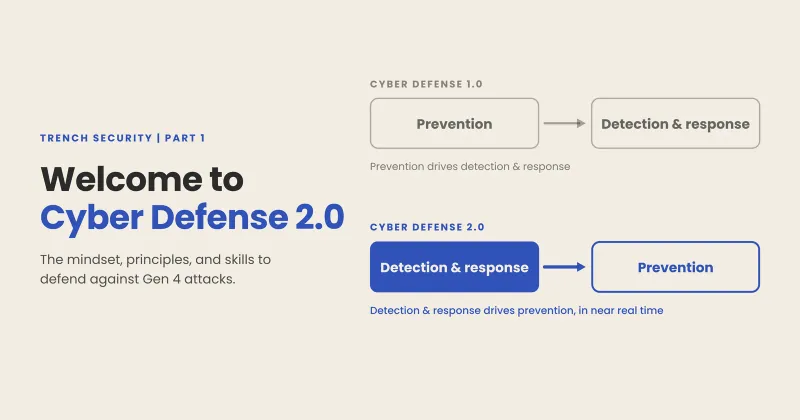
Most AI security tools are built around Human in the Loop. The AI works, surfaces a result, and waits for a human to proceed. Every alert, every enrichment, every proposed action: the human is inserted as a checkpoint between input and output. The system cannot close anything without them stepping in.
This is not a design philosophy. It is a constraint the industry dressed up as a feature.
Human on the Loop is different. The system acts autonomously on decisions it can make with confidence. The human is not removed. They are watching, they can intervene, and they are called in for decisions that genuinely require judgment. The difference is not human involvement versus no human involvement. The difference is where in the workflow the human sits.
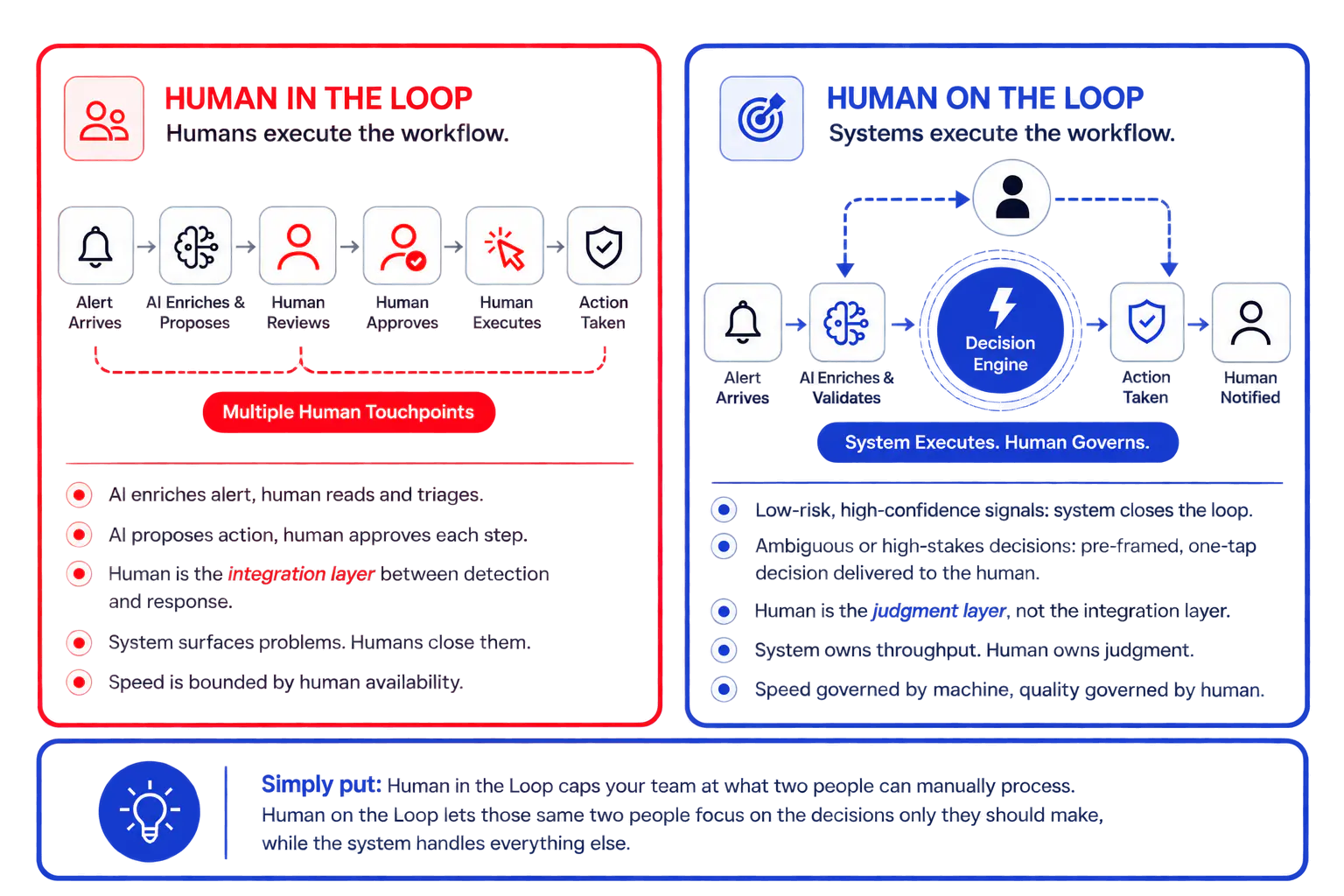
This is not philosophical. It is operational. It is what separates a tool that improves analyst efficiency from a system that changes what a lean team can actually protect.
The Principle: What Actionable SecOps Actually Means#
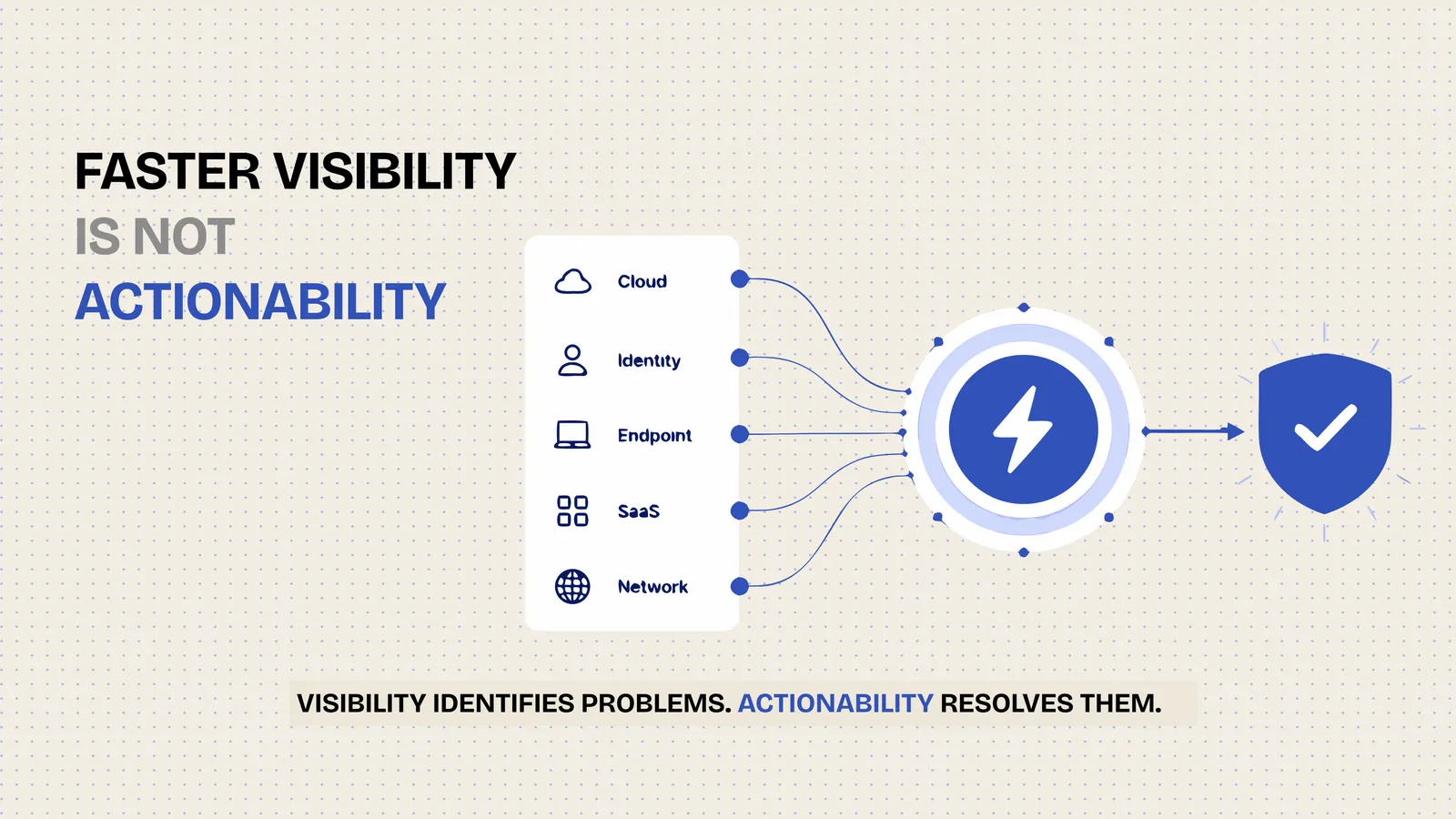
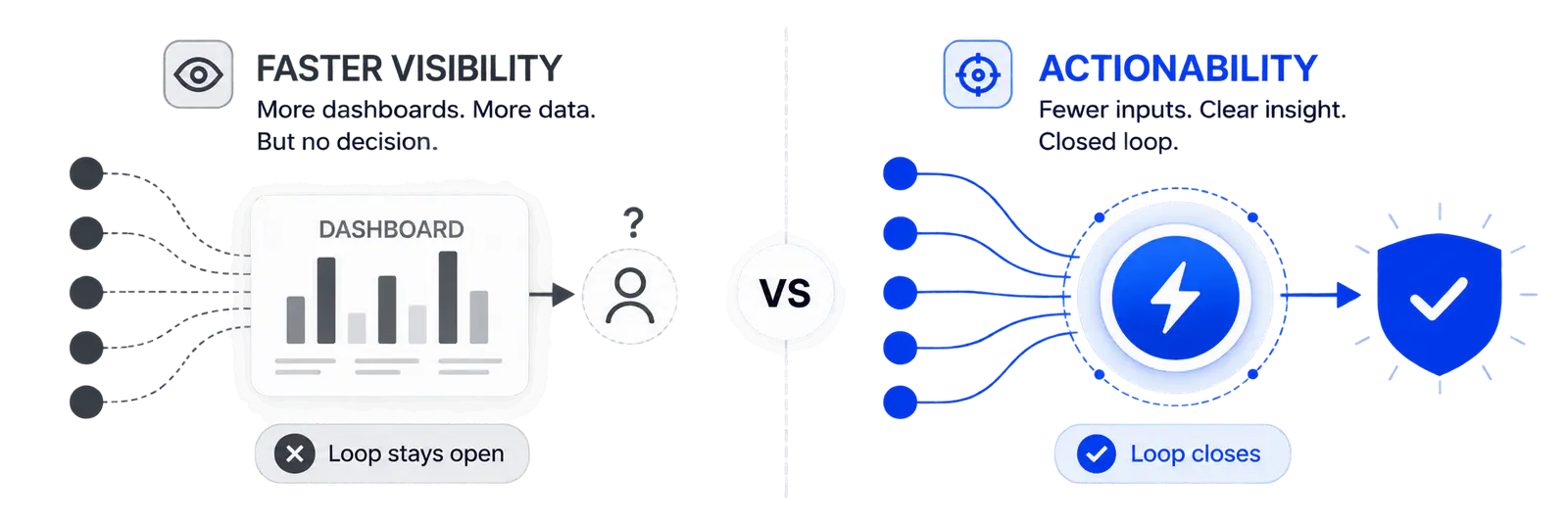
The word "actionable" has been hollowed out by vendor marketing. Every SIEM dashboard claims actionable intelligence. Every MDR pitch deck ends with actionable insights. What they deliver is faster visibility, which is useful, but visibility without a closed loop is just a better view of a problem the team still cannot resolve fast enough.
Actionable means the outcome is delivered, not the problem surfaced. The loop closes. Something is done. Not queued.
For any security signal, ask: does the system close the loop, or does it hand off? If the answer is hand off, to a queue, a ticket, a dashboard, a notification, the system is not actionable. Actionable means an outcome is delivered with the minimum human involvement the decision actually requires, not the maximum the architecture assumes.
Actionable SecOps maps across three modes, introduced in the Headless SecOps post. Each mode represents a different class of decision and a different level of human involvement. The scenarios below are drawn from what we see running across our customer environments every day.
Mode 1: Zero UI#
Agent acts. No human required. Detection, enrichment, and response run fully in the background. The outcome is delivered. The team is notified of what happened, not asked to act on what might.
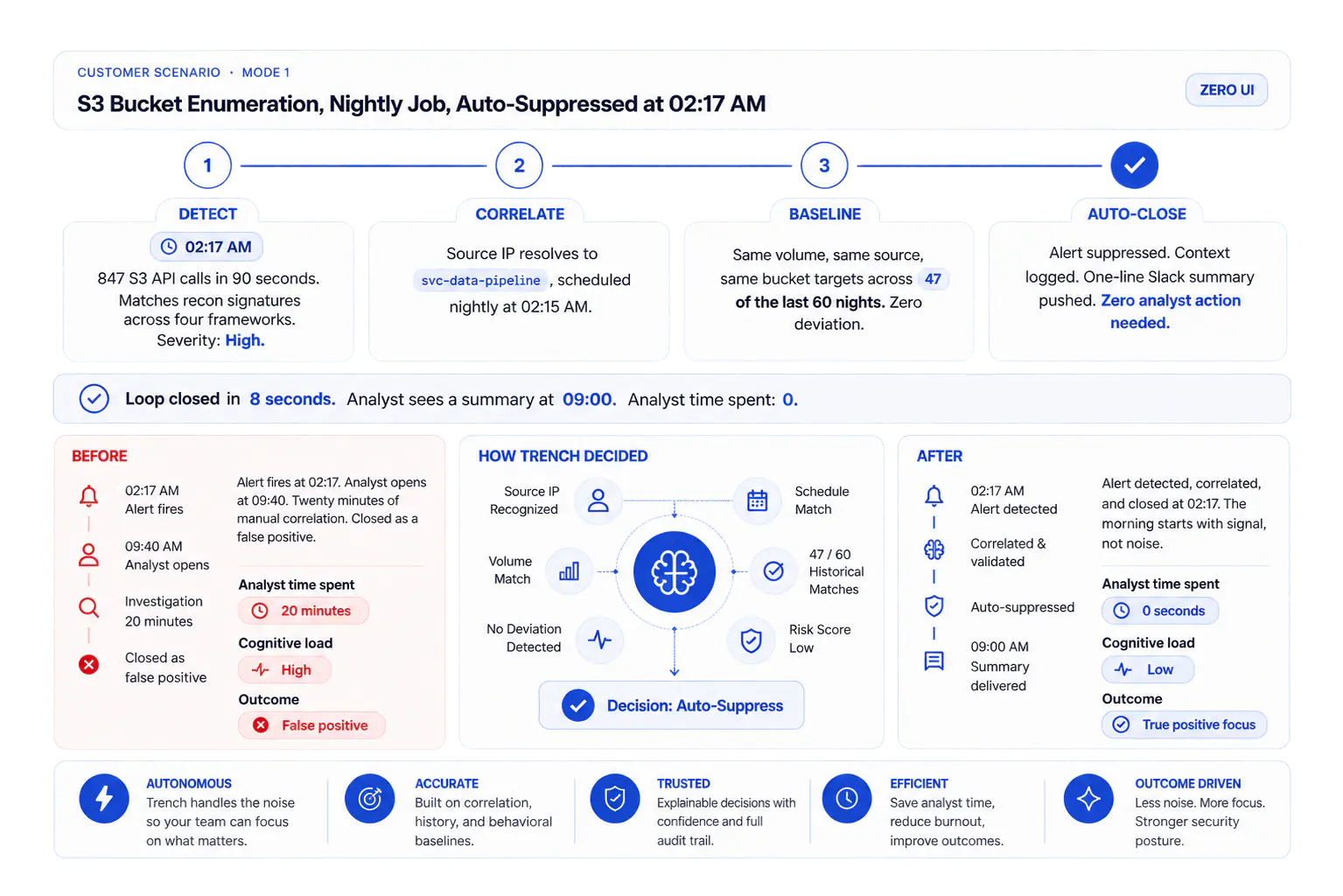
Zero UI covers the majority of signals in any well-instrumented environment: recurring false positive patterns, known service account behaviours, confirmed low-risk events where the correct action is unambiguous. These should never reach an analyst queue. The system closes them, logs the reasoning, and moves on.
Customer Scenario : Scheduled Scan Misread as Reconnaissance#
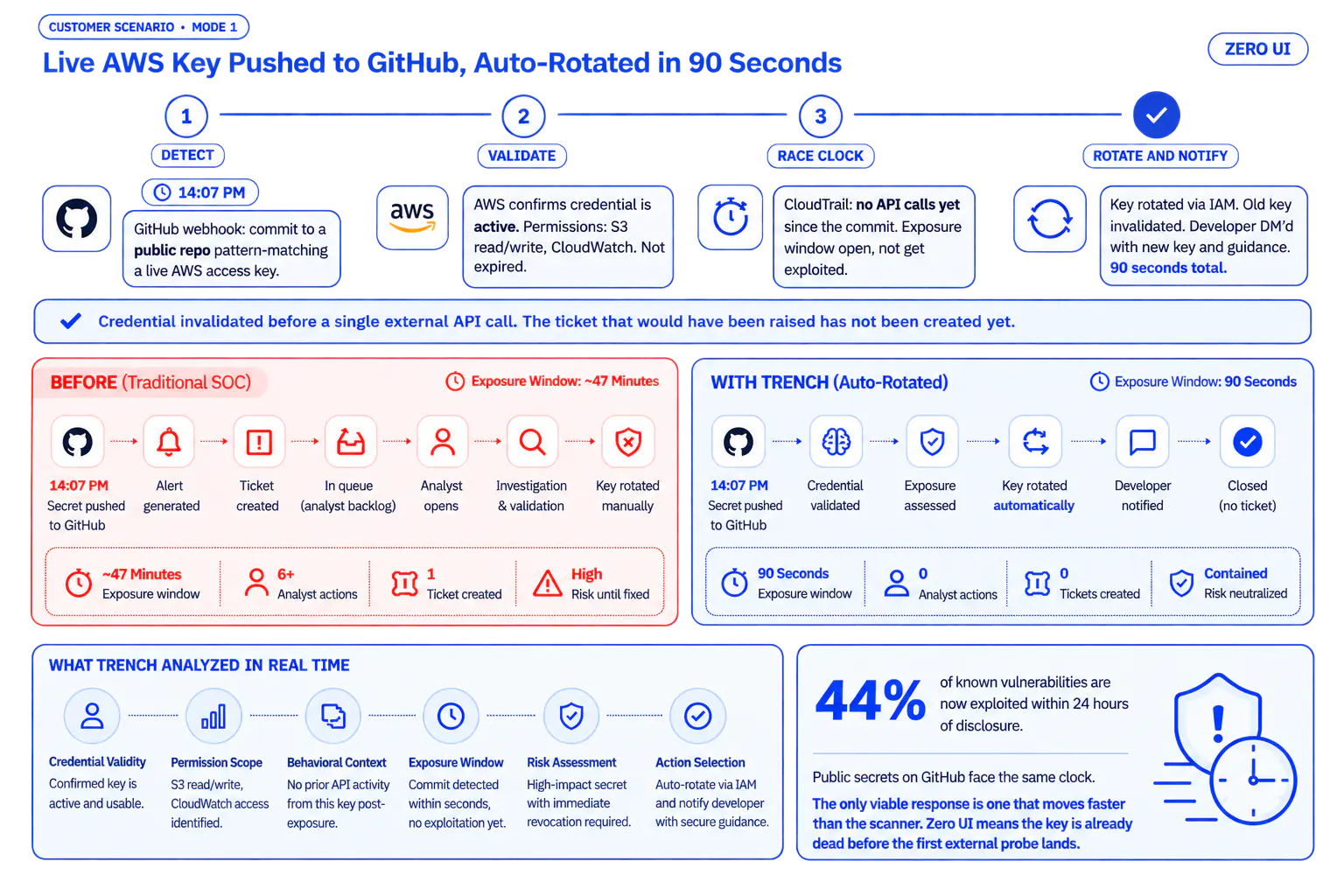
Customer Scenario : API Key Exposed in a Public Repo, Rotated Before It Is Exploited#
Mode 2: Conversational#
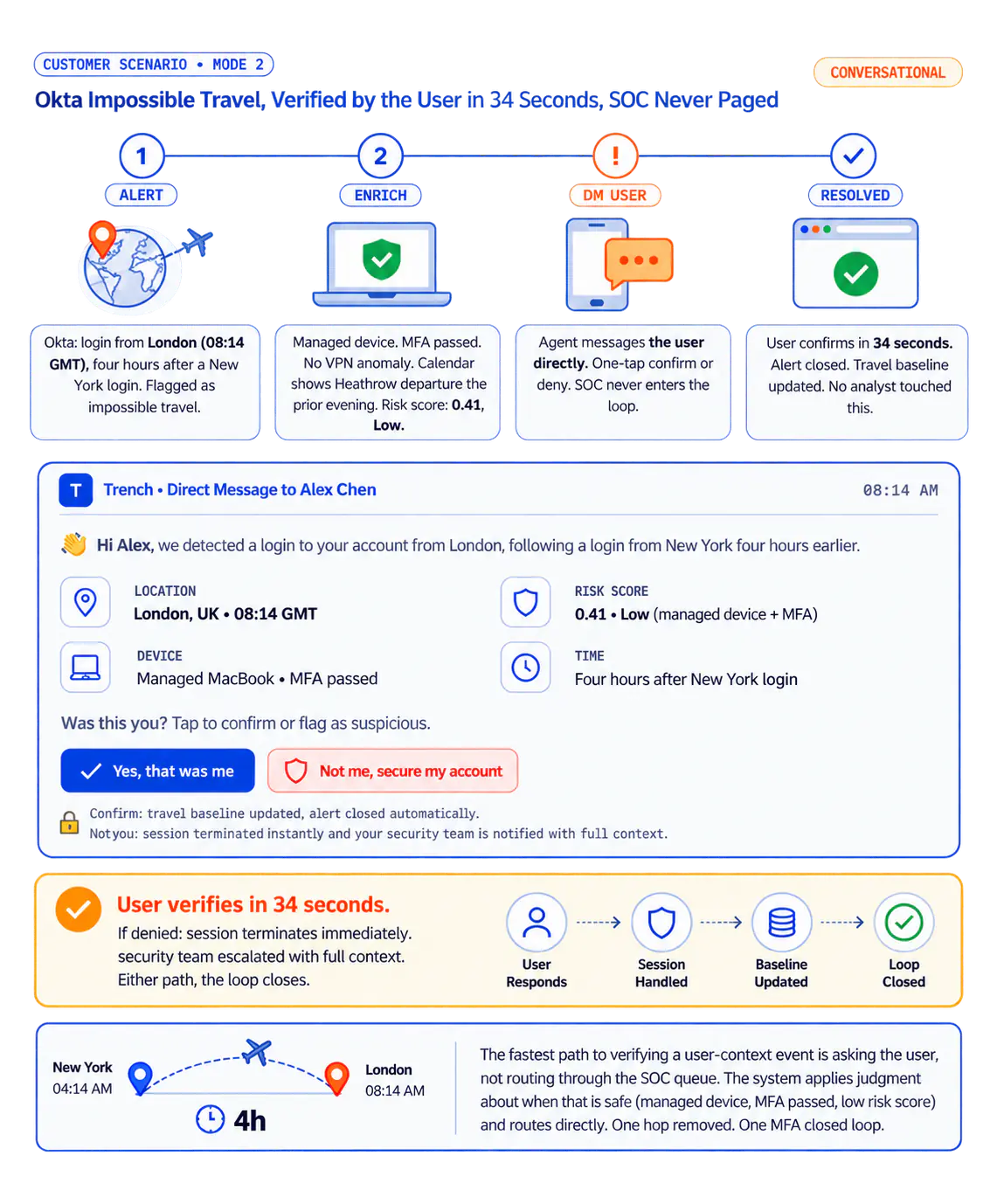
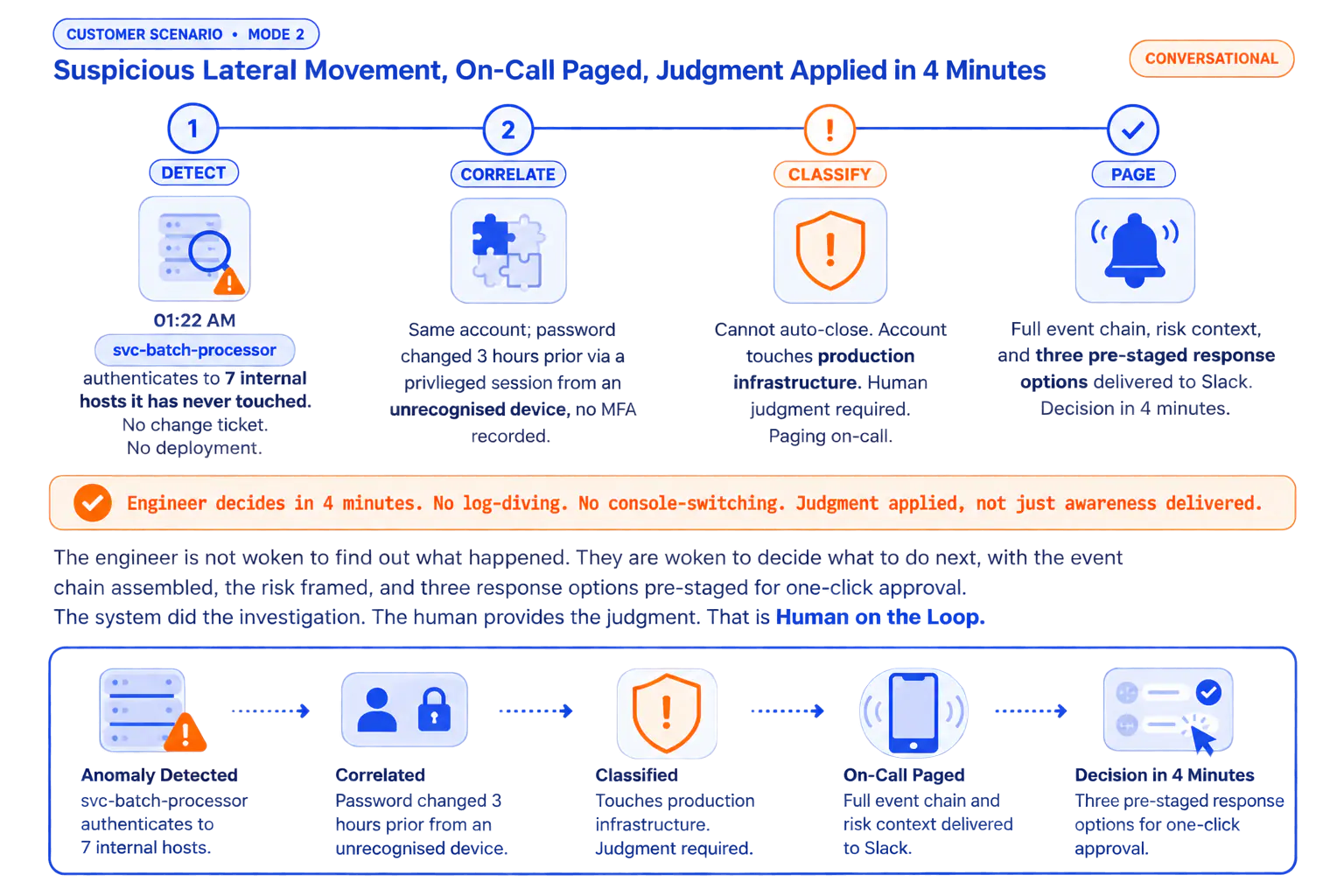
Agent surfaces. Human approves. High-signal events that require a judgment call route directly to the right person in Slack, Teams, or Claude, with full context assembled and the decision pre-framed. One interaction. Loop closed.
Conversational mode is where Human on the Loop looks most different from Human in the Loop. The analyst is not opening a console, pivoting across tools, or reconstructing a timeline. The system has done all of that and arrived with a framed decision. The human's job is judgment, not investigation. Two very different things.
Impossible Travel: The Agent Asks the User Directly#
Lateral Movement at 1 AM: On-Call Gets the Decision, Not the Discovery#
We fix the first blind spot in the first 48 hours.
See it liveMode 3: On-Demand Context#
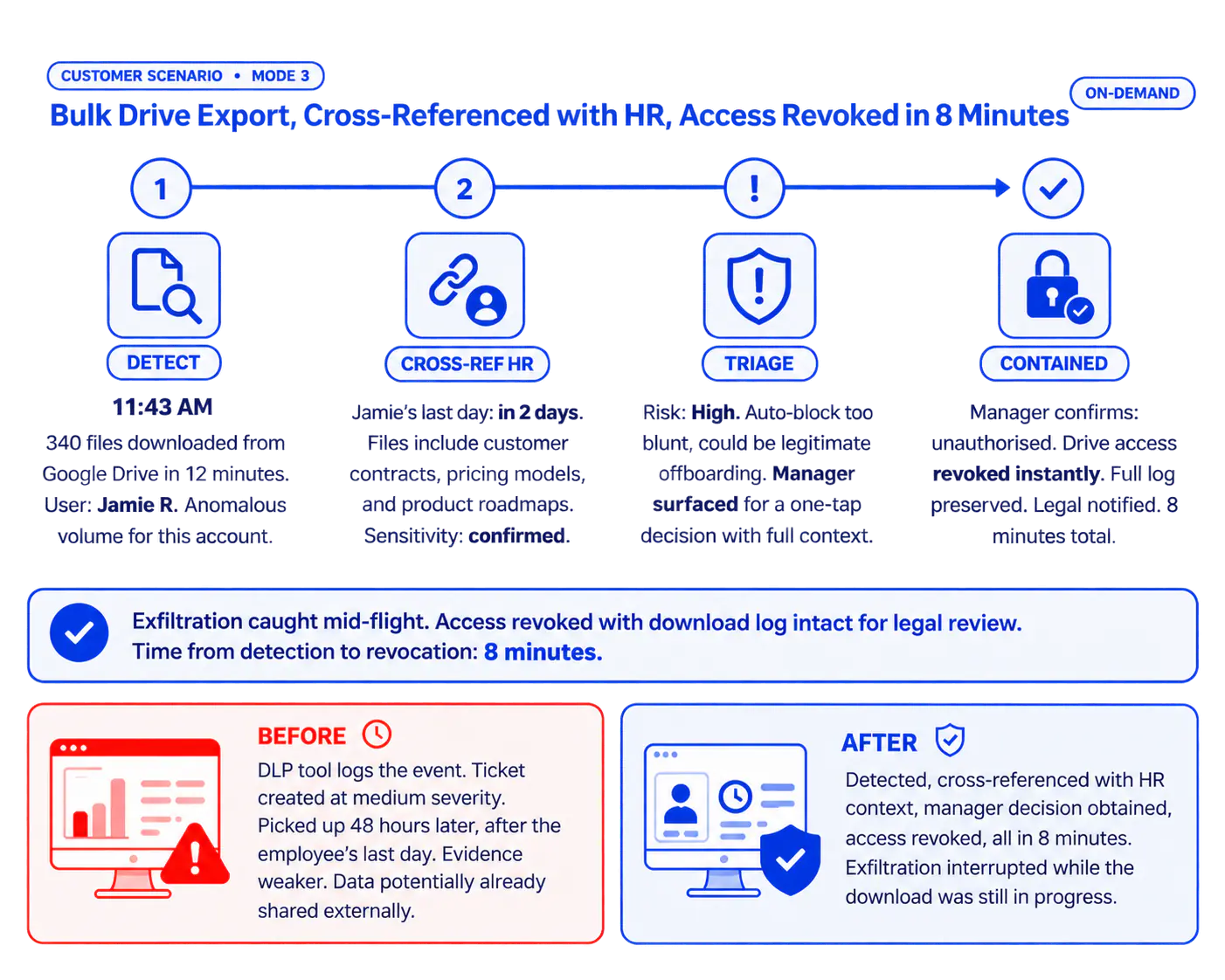
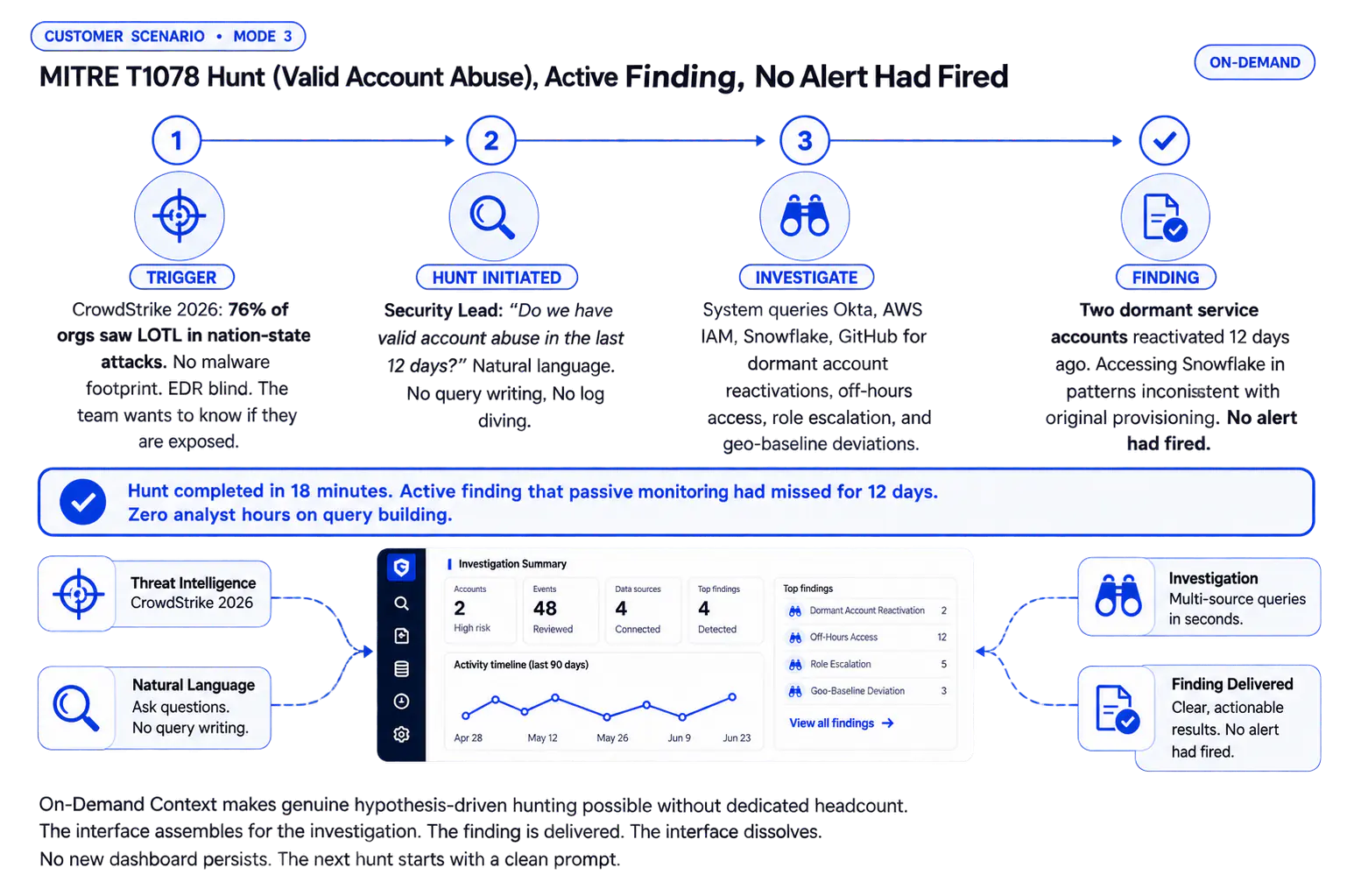
Human leads. Context generated. For complex unknowns and proactive work, the system assembles full context on demand, surfaces what passive monitoring missed, proposes actions, and dissolves when the decision is made. No new dashboard. No persistent console.
On-Demand Context covers the work lean teams know they should be doing but rarely have capacity for: threat hunting, deep-dive investigations, DLP analysis. SANS data confirms what we hear from customers: 85% of SOCs remain purely reactive, with what most teams call "threat hunting" often being retroactive analysis after an alert has already fired. These are the tasks that require querying across multiple systems, correlating signals over time, and building a picture from partial evidence. All scarce resources on a lean team.
Customer Scenario : Departing Employee Data Exfiltration, Caught Mid-Flight#
Living-Off-the-Land Hunt: Finding What Passive Detection Missed for 12 Days#
The Foundation: The Infrastructure Behind It#
Every scenario above depends on something that cannot be bolted onto an existing platform. Closing loops in real time, across cloud, endpoint, identity, SaaS, and network, while maintaining enough environmental context to distinguish a legitimate nightly job from reconnaissance, requires infrastructure built specifically for actionability. Not visibility. Not triage. Actionability.
Most SIEM architectures were built to ingest and store. Data flows in, rules fire, alerts are created, humans pick them up. The system's job ends at the alert. Everything after that is a human problem. That architecture was appropriate for an era when threats moved slowly and security teams were large. Neither is true now. Learn more from our previous post.
Trench is built differently, from the data layer up:
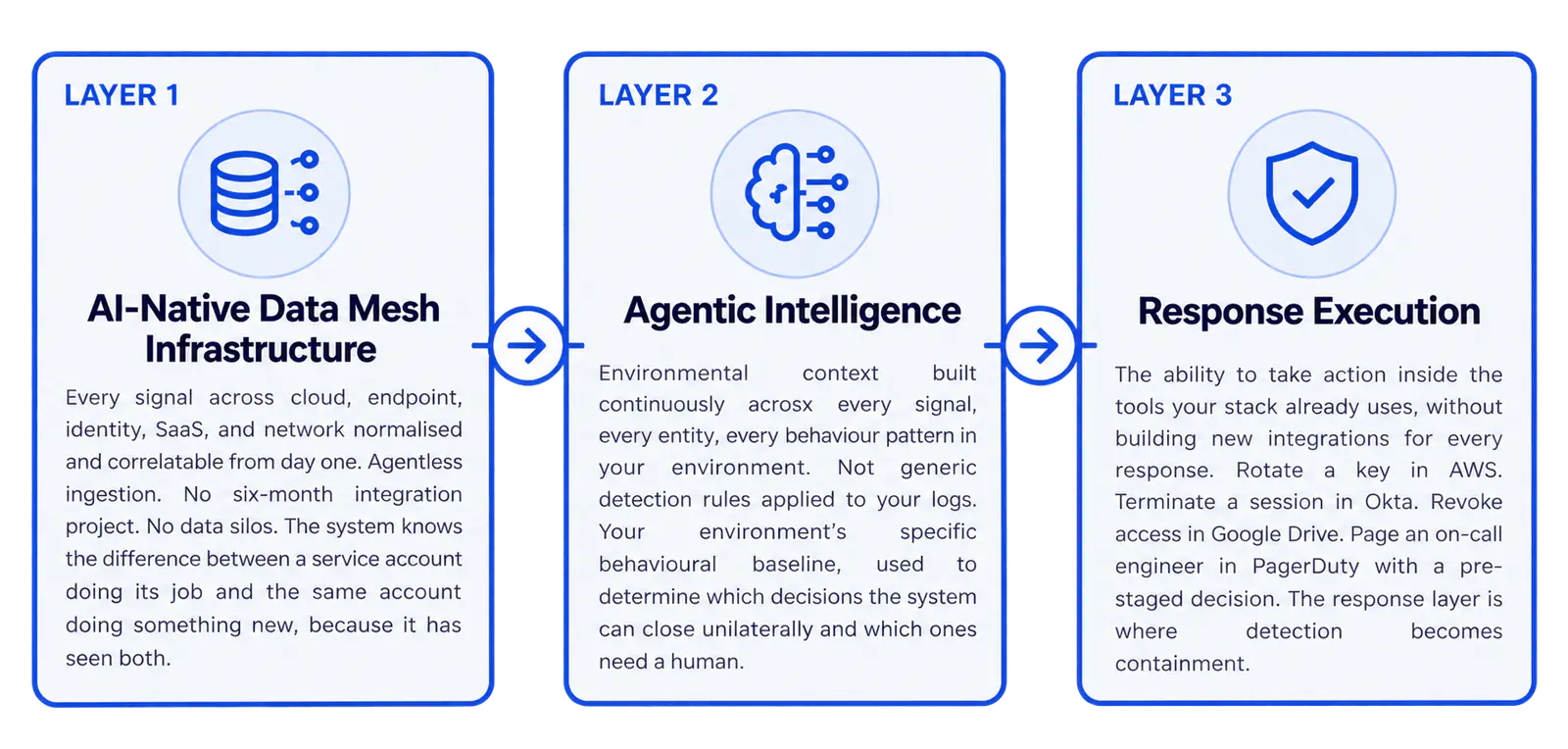
Without all three layers, you have a better SIEM. With all three, you have Actionable SecOps. The difference is not a feature. It is what the system is fundamentally designed to do.
The Destination: Path to Cognitive Harmony#
In the Headless SecOps post, we named the real disease: "Alert fatigue is the symptom. Cognitive overload is the disease." The context-switching across six consoles. The manual stitching of signals that should already be correlated. The high-stakes decisions made under time pressure at 11 PM. The queue that resets every morning like nothing happened the night before.
AI triage addressed the symptom, not the disease. It made the overload faster. More enriched alerts to open. More classified noise to dismiss. The analyst is still in the middle of every decision, still the bridge between detection and outcome.
Cognitive harmony is not a lighter queue. It is a different architecture. The system handles the throughput. The analyst handles the judgment. Not because the analyst has been removed, but because the system finally puts them where their judgment is irreplaceable and removes them from everywhere it is not.
You cannot patch your way out of a design flaw. The design flaw in modern security operations is the assumption that a human must bridge every gap between signal and outcome. Actionable SecOps removes that assumption.
The scenarios above are not projections. They are what cognitive harmony looks like in a real environment: the false positive closed at machine speed, the lateral movement surfaced with the decision pre-framed, the exfiltration caught mid-download, the hunt finding what 12 days of alerts missed. Not a better alert. A closed loop.
This is your Trench.
Trench fixes your blindspots in minutes.
See it liveDiscussion (0)
No comments yet. Be the first to start the discussion!